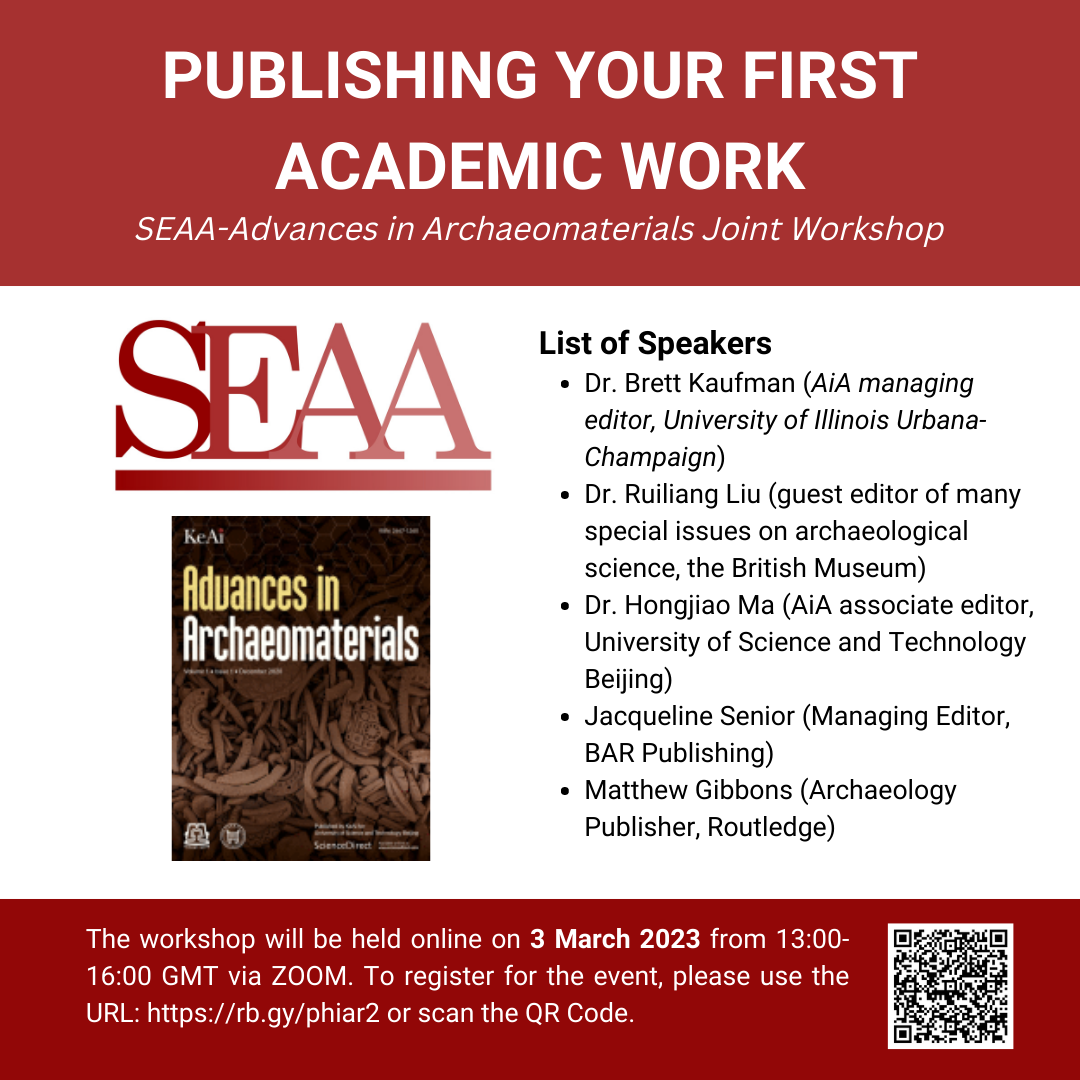
Publishing is one of the most important goals for researchers and graduate students in the field of East Asian archaeology. After gathering data, everyone needs to face the questions of how to write a clear argument that attracts editors’ attention and how to find the right journal or publisher to submit their works. For scholars and students working in East Asia, many also need to publish in a language different than their mother tongues.
News tags
By Gao Dalun, translated by Anke Hein
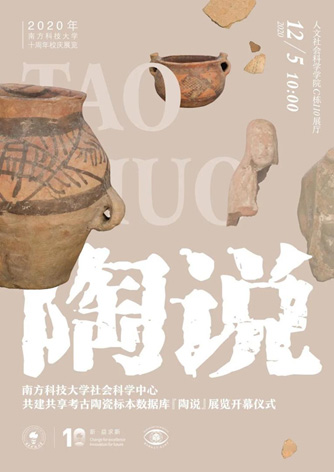
As the saying goes, “if you plant one seed of millet in the spring, you will harvest ten thousand grains in autumn.” After a year and a half of meticulous preparation, the archaeological ceramic specimen database of the Social Science Center has finally reached a preliminary completion. To display the full cultural and academic value of this archaeological achievement, allow for more people to learn about and make use of the collection to carry out archaeological research, and to stimulate the public's interest in archaeology and history, the Social Center held an opening ceremony for the "Ceramic Stories" exhibition on December 5, 2020. More than 40 researchers from archaeological and cultural institutions across the country gathered at the Southern University of Science and Technology to celebrate the completion of the collection. Among them were Prof. Zhou Yongming, Director of the Center for Social Sciences, Prof. Chen Yuehong, Dean of the School of Humanities and Social Sciences of the Southern University of Science and Technology, Prof. Gao Dalun, former head of the Sichuan Provincial Institute of Archaeology and leading director of the Ceramic Specimen Collection at the Social Science Centre, Dr Yegor Grebnev, former doctoral and postdoctoral student at the University of Oxford and now postdoctoral researcher at the Southern University of Science and Technology in Shenzhen, and various researchers focusing on ceramic studies, among them Gao Xuyang, DPhil student at the School of Archaeology, University of Oxford, who assisted in preparing the exhibition.
Monday, 1 November, 2021, 16:00 BST, via MS Teams (Click here for the talk)
Dr Steven Acabado (UCLA): Decolonizing the Past, Empowering the Future: Communities and Archaeological Practice in the Philippines
The 2nd edition of Archaeology of East Asia: The Rise of Civilization in China, Korea and Japan is now available in paperback format at Blackwell's for half price for a limited time.
Founded in 1898, Peking University was initially named as the Imperial University of Peking, whose establishment marked the threshold of modern Chinese higher education. Now with a community of over 40, 000 students, faculty members and staff from a variety of cultural backgrounds, Peking University has become a vibrant and internationalized institution in promoting teaching and academic studies.
SEAA is pleased to announce Prof. Peter Bellwood from Australian National University has been awarded the 28th International Cosmos Prize for his contributions to developing our understanding of past human societies, and especially his research on the early farming dispersal hypothesis in Southeast Asia. For more information see the following links:
https://www.anu.edu.au/news/all-news/anu-archaeologist-awarded-top-honour-for-lifes-work--
About ISAW's PhD Program:
Encompassing the ancient world from the western Mediterranean to East Asia, from the Neolithic to the early Medieval period, the Institute for the Study of the Ancient World is focused on creating a new generation of scholars whose work crosses over the disciplinary boundaries of traditional departments.
Tromsø University Museum, UiT The Arctic University of Norway has a four-year position vacant from 1st May 2019 for applicants who wish to obtain the degree of Philosophiae Doctor (PhD).
The position is on the project “Jomon Environmental Archaeology and diet, and a comparison with N Scandinavian Hunter-gatherers-fishers”.
The Robert H. N. Ho Family Foundation Buddhism Public Scholars Fellowships in Buddhist Studies places recent recipients of the PhD in professional positions at host institutions (museums, libraries, and publications) that present and interpret knowledge of Buddhist traditions. The selected Buddhism Public Scholars will use their academic knowledge and professional expertise to bolster the capacity of host institutions in the area of Buddhist art and thought in any tradition and location where Buddhism is practiced.